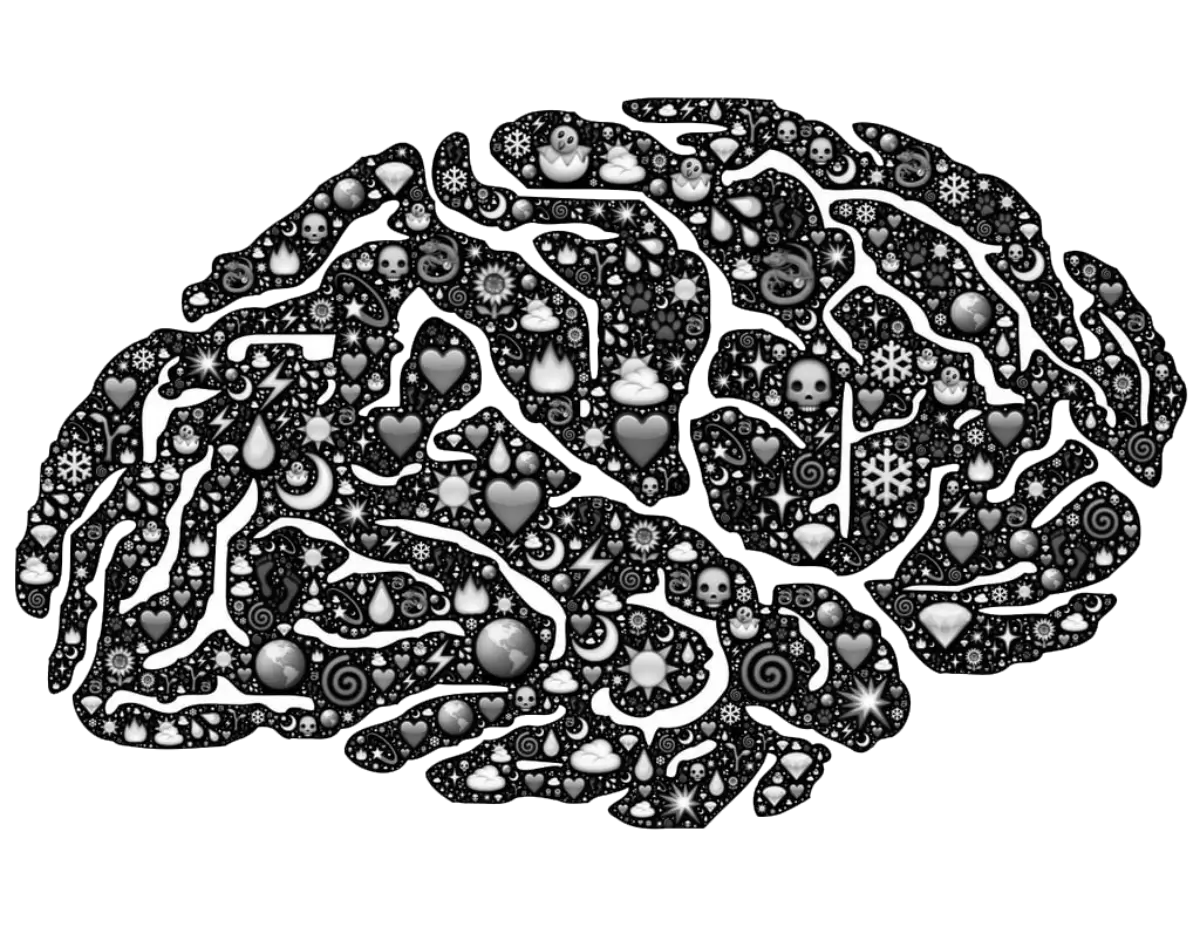
Mindsets: A Cartography of Experience is the second volume in the series Configurations of Appearance. It investigates the unnoticed structures through which a world becomes visible, meaningful and real. A mindset, in this book, is not an attitude, a belief, a personality type or a chosen philosophy. It is the architecture through which experience organises itself at a particular moment.
We never encounter a neutral world and only afterwards begin to interpret it. By the time anything appears, experience has already selected what matters, distinguished foreground from background, assigned meaning, located a self and established a sense of continuity. These operations usually remain invisible because they do not stand outside experience. They are the conditions under which anything can appear at all.
A mindset is not a belief, not a doctrine, not a philosophy. It is the unnoticed atmosphere in which everything appears.
Mindsets approaches these configurations as terrains rather than types. It does not ask what kind of person someone is, but what kind of world is appearing now. The same individual may inhabit a pragmatic world in one situation, an analytical one in another, a narrative or religious world elsewhere, and under pressure may shift into configurations organised around threat, distance, acceleration or withdrawal. These worlds can overlap, contradict one another and change without conscious decision.
The architecture of experience
The book begins by examining the basic architecture that makes experience workable. Distinctions such as self and world, cause and intention, inner and outer, relevant and irrelevant are not conclusions reached through reflection. They operate before reflection and allow a coherent world to take form. A mindset is a particular arrangement of these distinctions: a temporary but convincing organisation of perception, memory, language, bodily sensitivity, agency and meaning.
This architecture has no architect. It is not deliberately designed and does not rest on a foundation outside experience. It becomes visible mainly through its effects: what feels obvious, what can be questioned, what remains unnoticed and what fails to appear at all. Stability easily creates the impression that a configuration reflects reality itself, but stability proves only that a structure is functioning for now.
Different mindsets therefore do not merely offer competing interpretations of one neutral world. They produce different world-appearances. What counts as reasonable, threatening, sacred, meaningful, empty or self-evident depends on the configuration through which experience is taking shape.
A cartography without borders
The word cartography might suggest a fixed map with clearly separated territories. The book deliberately resists that image. Mindsets rarely appear in pure form. They overlap, form hybrids, partially replace one another and may govern different parts of a life at the same time. One configuration may organise practical action, another emotional response and another reflective interpretation.
The map is therefore provisional. Its purpose is not to classify people, but to make recurring patterns visible. It describes familiar configurations such as the conventional, pragmatic, analytical, autistic, narrative, religious, spiritual and knowledge-seeking mindsets. None is presented as a default or as a more mature way of experiencing. Each makes certain things visible while obscuring others.
The conventional mindset creates continuity through shared expectations and social order. The pragmatic mindset is organised around what works. The analytical mindset seeks clarity through distinction and explanation. The narrative mindset gives experience coherence by placing events within a story. The religious mindset receives meaning from a transcendent order, while the New Age spiritual mindset discovers hidden patterns, energies and opportunities for growth. The autistic and hyper-attuned mindsets reveal forms of sensory and affective organisation in which details, intensity and environmental resonance remain unusually present.
These descriptions do not tell the reader who they are. They show how many different worlds may appear through one life.
Worlds under pressure
The book also turns toward configurations that arise when ordinary coherence becomes strained. Trauma may reorganise experience around danger and survival. Dissociation may preserve functioning through distance and reduced contact. Mania may create coherence through speed, expansion and connection, while depression may maintain a world through contraction and the withdrawal of significance.
These states are neither romanticised nor reduced to errors. They are described as ways in which experience attempts to remain workable under conditions it cannot otherwise absorb. What appears irrational from outside may feel necessary from within. At the same time, the book refuses the opposite mistake of turning instability, fragmentation or loss of orientation into spiritual insight.
Chemically induced worlds make this distinction particularly clear. Psychedelic and other drug-induced experiences can radically reorganise perception, meaning and selfhood. Their intensity may feel revelatory, but intensity does not establish truth. Coherence can be produced chemically, significance can become saturated and the absence of friction can easily be mistaken for liberation. What such experiences reveal most reliably is not a hidden reality, but the plasticity and vulnerability of experiential organisation.
Non-duality and the unframed
Mindsets treats non-duality in two different ways. First, it can function as a mindset: a coherent configuration in which the distinction between subject and object loses force and experience no longer appears to be organised around a separate centre. This may feel spacious, immediate and self-evident, but it remains one possible architecture among others.
Later, the book approaches what it calls the unframed: moments in which orientation itself falls away. Here non-duality is no longer presented as a worldview or inhabitable position, but as experience without a stable standpoint. Headlessness describes perception without a felt centre. Emptiness appears as transparency, in which forms no longer seem solid or self-supporting. Darkness names a more radical absence of orientation in which nothing provides direction, meaning or promise.
These conditions are not placed above the other mindsets. They do not reveal reality as it truly is, offer liberation or complete a developmental journey. They are included because they occur and because they demonstrate that experience can continue even when some of its familiar organising structures disappear.
No development toward a final world
A persistent target of the book is the belief that human experience develops toward higher awareness, integration or truth. Configurations change, but change does not imply progress. A later mindset does not necessarily contain or transcend an earlier one. It simply reorganises what matters, what appears coherent and what can be taken seriously.
Thresholds arise when an existing configuration can no longer absorb what appears. These shifts may follow crisis, fatigue, sustained contradiction, encounter with another world or slow reflection. They are not chosen and do not point in a predetermined direction. Experience may open, constrict, fragment, stabilise or return to an earlier form.
The hierarchy of “higher” and “lower” awareness is therefore replaced by a flatter cartography. Some worlds may be more workable in a particular context. Some may reduce suffering or increase it. Some may be dangerous, generous, rigid or fragile. These differences matter, but they do not establish a metaphysical ranking.
Ranking gives way to mapping. Aspiration gives way to description.
Misreadings between worlds
Much human conflict arises because one mindset interprets another according to its own invisible standards. Analytical worlds may dismiss symbolic or narrative experience as confused. Spiritual worlds may interpret psychological distress as resistance or awakening. Conventional worlds may treat unfamiliar configurations as irrational, while therapeutic frameworks may pathologise experiences they cannot translate.
Advice often fails for the same reason. Suggestions such as “let go,” “take responsibility,” “be present” or “think rationally” assume that the other person inhabits the same architecture. Where that shared ground is absent, correction can deepen the misunderstanding.
The book does not promise complete translation. Its final ethical gesture is more modest: standing beside. To stand beside another world is to remain present without immediately reducing it to one’s own categories. It is not agreement, endorsement or passive acceptance of harm. It is restraint: the refusal to assume that every difference must be corrected, resolved or absorbed into a shared frame.
An open field
No list of mindsets can be complete. New configurations arise through cultural change, technology, collective trauma, altered environments, neurological variation and unforeseen combinations of existing patterns. The mindsets described in this book are examples within an open field, not the contents of a closed system.
There is also no meta-mindset from which all other worlds can be surveyed without itself becoming another configuration. Even the attempt to map experience belongs to a particular way of looking. The cartographer remains inside the terrain.
Mindsets therefore does not end with a final map, but with the recognition that worlds continue to appear, stabilise, overlap and dissolve. Living without a final world does not mean living without meaning, responsibility or commitment. It means allowing those things to remain local, provisional and unfinished, without demanding that they rest on an ultimate ground.
The book offers no method for choosing a better mindset and no route toward a final state. It offers something more limited and perhaps more useful: a language for noticing how experience organises itself, how temporary worlds acquire authority and how easily one world is mistaken for the world.
Mindsets: A Cartography of Experience
Ton Haarmans, 2025
Second volume in the series Configurations of Appearance.
Download a chapter on the [[/content/resources/downloads|download page]] of this project or order the book from Amazon.
Leave a reflection
If this page prompted a thought, question or observation, you can send it to Wide Open Windows. Nothing is published automatically.