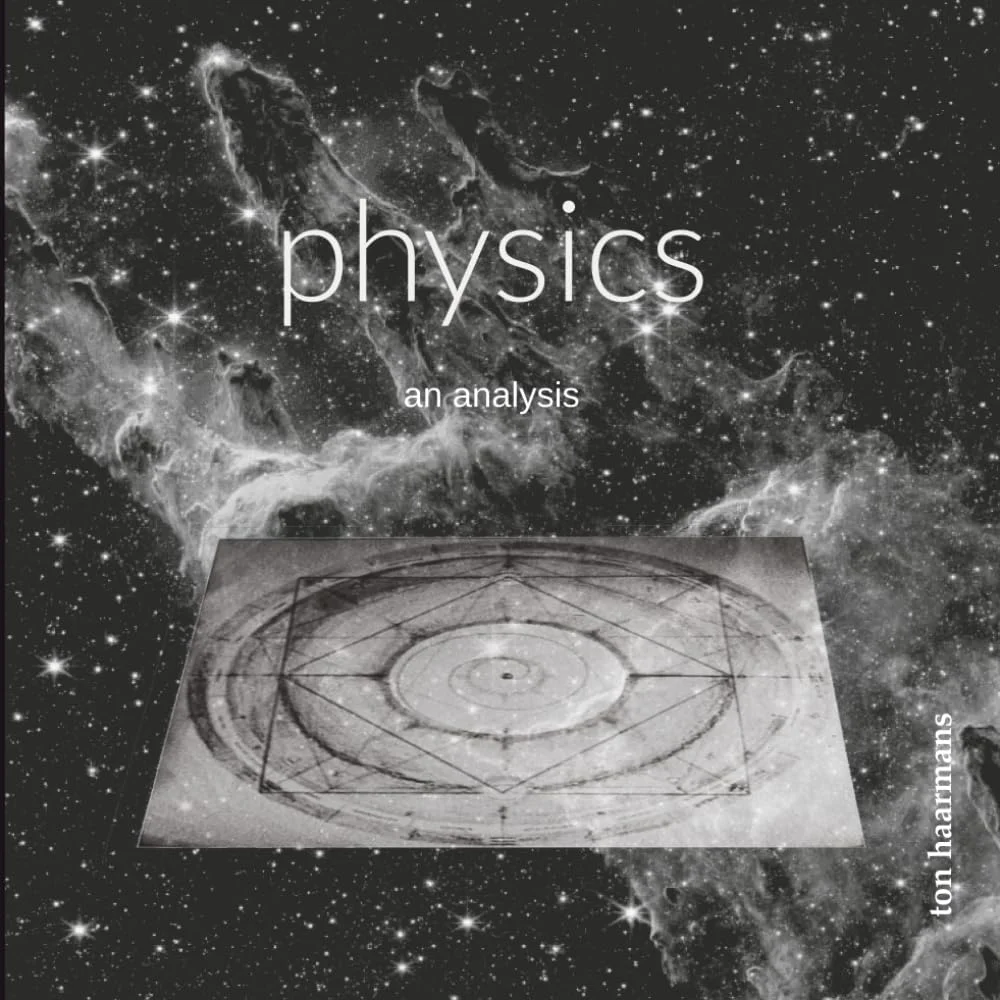
Physics is often regarded as our most successful attempt to understand reality. Its theories predict eclipses, explain atoms, describe galaxies, and make modern technology possible. Few intellectual achievements have transformed human civilization more profoundly.
Physics. An Analysis begins by entering this remarkable scientific world on its own terms. It explores the development of modern physics, from classical mechanics to relativity, quantum theory, and contemporary cosmology, tracing the extraordinary conceptual structures through which the physical universe has become intelligible.
The inquiry then takes a step back. Using a dioramic perspective, physics is examined not simply as a collection of objective discoveries, but as a coherent way of organizing experience. Scientific concepts, mathematical models, experiments, and instruments together constitute a distinctive world—one that reveals certain aspects of reality with extraordinary precision while necessarily leaving others outside its scope.
Rather than questioning the achievements of science, this book investigates how the scientific worldview itself emerges. It is an invitation to appreciate physics both as one of humanity's greatest accomplishments and as one among several powerful ways in which a meaningful world can appear.
Physics: An analysis
Ton Haarmans, 2026
Third volume in the series Analysis.
Download a Dutch translation on the [[/content/resources/downloads|download page]] of this project or order the book from Amazon.
Leave a reflection
If this page prompted a thought, question or observation, you can send it to Wide Open Windows. Nothing is published automatically.